TOP WORKPLACES LABS
Talent Management Strategies of Top Workplaces
Top Workplaces don’t just talk about culture—they connect it directly to how they hire, develop, and retain top talent. This free report shows you exactly how they do it—so you can follow the same steps to attract great people, grow stronger teams, and drive real business results.
Inside the report, you’ll learn:
- 3 proven steps Top Workplaces use to hire smarter, build teams faster, and fuel growth
- Emerging talent practices to watch—like culture-fit hiring and predictive analytics
- Practical, no-fluff actions you can apply immediately to boost performance
Talent Management Strategies of Top Workplaces
How Top Workplaces Unlock Potential to Drive Workplace Excellence—and How You Can Too
The Energage People Science Team
Connecting a People-First Culture and Talent Strategy Drives Growth
Executive Summary
We set out to explore how organizations are approaching talent management today, including what they’re doing well, where momentum is building, and what differentiates the best from the rest. Our survey audience included a proprietary mix of Top Workplaces winners and employers aspiring to earn that recognition. Both groups already have stronger-than-average workplace practices. We uncovered clear patterns in how talent management is approached among them, including these key takeaways:
- Foundational practices are common. Most organizations have adopted core talent management practices and rate themselves at a mid-level of maturity.
- Traditional approaches dominate. While the basics are widely in place, organizations often rely on established methods rather than exploring innovative strategies.
- Technology gaps persist. Few organizations are leveraging modern tools to enhance analytics, workforce planning, and overall talent strategy.
- High maturity is rare. Advanced practices—particularly those tied to data, planning, and technology—remain uncommon.
- Top Workplaces show what is possible. They hire with culture in mind, prioritize development at every level, and clearly identify top performers with a plan to grow their impact.
- Intentional consistency drives results. Top Workplaces’ talent management practices aren’t complicated or revolutionary—but they are deliberately applied, consistent, and effective.
- Culture drives measurable impact. Top Workplaces score highly on the same research-backed survey that informs the Human Capital Factor ETF, which has outperformed the S&P 500 by 70% over the past 14 years.
In short, while most organizations have mastered the basics, Top Workplaces demonstrate how connecting culture, strategy, and people practices creates measurable impact in the workforce—and on the bottom line.
Top Workplaces Don’t Just Win Awards—They Win at Culture, Talent, and Performance Too
We studied the nation’s Top Workplaces, employers celebrated for their award-winning cultures. We found that they go further, connecting culture and talent management to attract, grow, and retain top talent that drives real results. This report reveals exactly what they do, and how you can apply the same practices to achieve similar success.
Top Workplaces are recognized by scoring highly on the same research-backed employee survey that informs the Human Capital Factor ETF, a financial instrument developed by Irrational Capital and the results speak for themselves. Over the past 14 years, that ETF has outperformed the S&P 500 by a staggering 70%. Top Workplaces earn credible recognition, getting their brands in front of millions of people each year through features in 60+ leading media outlets, including USA TODAY, The Washington Post, the Chicago Tribune, and more.
And they don’t stop there. They turn that status and visibility into stronger talent pipelines, deeper employee trust, and lasting business outcomes.
THE CONNECTION IS CLEAR
Great culture fuels success! Now let’s explore how Top Workplaces are leveraging talent strategies and the employee experience to drive results and how you can, too.
Top Workplaces Are Ahead in Talent Maturity
Top Workplaces are known for their people-first cultures, and they also lead with stronger talent strategies. In other words, they don’t just value people—they build intentional systems to help them thrive and grow. Our study assessed the prevalence, maturity, and integration of talent management practices across seven key domains:
- Recruiting
- Employee Selection
- Performance
- Development
- Listening
- Action & Analysis
- Planning & Analytics
On a five-point scale, Top Workplaces earned an average talent maturity score of 3.40, while Aspiring Organizations averaged 2.92.
Aspiring Organizations are in a solid middle zone. They’ve adopted foundational practices like annual reviews, performance goals, and basic selection processes. Some are going further, experimenting with coaching, development programs, or early-stage succession planning. Think of it as: “We’re doing something, but it’s mostly table stakes.”
Top Workplaces, on the other hand, show higher maturity and greater variation too, which is an indication of both depth and innovation. Their higher scores reflect more widespread adoption of strategic practices and advanced integration across systems. They’ve moved beyond one-off initiatives and built connected, people-centered strategies that align hiring, development, performance, and culture. It’s not all about doing more. It’s about doing what matters and doing it well. Think of it as: Top Workplaces aren’t just checking boxes. They’re connecting the dots and seeing stronger results because of it.
Talent Maturity Is About Depth, Not Just Quantity
One clear trend emerged across both groups: Every additional, people-focused practice contributes to higher talent maturity. For Aspiring Organizations, every new practice makes a bigger impact. Whether it’s structured career conversations, culture-fit hiring assessments, or new tech-enabled tools, each layer delivers meaningful gains. In other words, even small steps forward can accelerate your progress.
WHAT THE DATA SHOWS:
Broader practice adoption = better outcomes. But don’t chase every trend. Instead, be intentional about choosing the right practices—those that reflect your culture, scale with your goals, and elevate the employee experience at every stage. You don’t have to do it all at once. Just start building—layer by layer—with what matters most.
What Sets Top Workplaces Apart
Top Workplaces aren’t trying to do everything. They’re doing the right things, with consistency, purpose, and alignment. They’ve moved beyond siloed efforts and built a cohesive talent strategy that reinforces their culture and supports performance. It’s not about being big. It’s not about being flashy. It’s about being intentional.
- Successful talent management is not about complexity. It’s about consistency.
- Meaningful talent management is not about checking a box. It’s about connecting the dots.
Small & Nimble, Big & Advanced: Talent Maturity by Company Size
When it comes to talent management, company size shapes the journey but not the destination. The data shows that larger organizations often have more systems in place, while smaller and mid-sized companies benefit from agility and closer connections. Both have strengths to build on—and both can make meaningful progress with the right practices.
Larger Organizations Tend to Show Higher Maturity
Large companies generally have established systems and dedicated HR teams, which gives them the structure (and resources) to implement advanced practices. They’re more likely to use tech-enabled tools, run formal development programs, and invest in succession planning.
But Small and Mid-Sized Organizations Aren’t Out of the Game
In fact, the data shows smaller companies have an agility advantage. While they may lack the same budgets or headcount of larger employers, they often:
- Build closer manager-employee relationships.
- Move faster to implement new practices.
- Foster cultures of feedback and connection.
And when smaller companies do invest in structured talent practices, those practices often make a bigger impact.
Every Step Forward Counts, Especially for Smaller Teams
One of the strongest findings? The link between practice adoption and maturity is strongest among smaller or aspiring organizations. Every new initiative—whether it’s a structured career conversation, onboarding checklist, or feedback tool—delivers noticeable gains. It’s not about scale—it’s about being intentional and consistent.
In a nutshell:
- Smaller employers leap ahead by being nimble and people-focused, prioritizing high-impact practices early on.
- Bigger employers have the infrastructure to build layered, mature systems; the challenge is staying agile.
No matter your size, the key is to be intentional. Add what matters and measure as you go.
Talent Practices That Move the Needle: What Top Workplaces Do Differently
While most companies we surveyed have the basics in place, the data shows that some talent practices are much more effective than others. And when we looked closer at how Top Workplaces manage talent, a pattern emerged. These organizations have built strength in a few key areas that make all the difference, and they do it in ways that are thoughtful, measurable, and aligned with culture:
- Hiring with culture in mind
- Unlocking growth and performance
- Investing in the talent pipeline
Employee Selection: Hiring with Culture in Mind
Top Workplaces start strong by making smarter, more intentional hiring decisions. They use tools like culture-fit assessments and structured interviews that go beyond skills and experience to evaluate long-term potential. They hire for values, collaboration, and alignment. At Top Workplaces, it’s not about filling roles. It’s about building teams that grow together.
PRACTICES WITH THE KEY GAPS:
- Culture-Fit Assessments: 50% of Top Workplaces Winners use these, compared to 27% of Aspiring Organizations.
- Structured Interviews: 96% of Top Workplaces Winners use these, compared to 84% of Aspiring Organizations.
- Executive/Key-Hire Processes: 36% of Top Workplaces Winners use these, compared to 23% of Aspiring Organizations.
- Employee Testimonials: 39% of Top Workplaces Winners use these, compared to 25% of Aspiring Organizations.
CULTURE-FIT ASSESSMENTS It’s not just about who you hire, but how you hire them. Culture-fit assessments ensure new hires align with the values and environment of the organization, not just the job description.
EMPLOYEE TESTIMONIALS Employee testimonials give job seekers authentic proof of your culture, adding credibility to your employer brand.
Employee Development: Unlocking Growth and Performance
Top Workplaces go beyond foundational talent management practices to unlock potential for growth and performance. They’re using things like integrated platforms, coaching with managers, and employee recognition programs to build a culture where people and performance thrive.
PRACTICES WITH KEY GAPS:
- Structured Career Conversations with Managers: 54% of Top Workplaces Winners use these, compared to 30% of Aspiring Organizations.
- Self-Assessment & Reflection Tools: 52% of Top Workplaces Winners use these, compared to 30% of Aspiring Organizations.
- Personality & Behavioral Assessments: 42% of Top Workplaces Winners use these, compared to 20% of Aspiring Organizations.
- Integrated Career Development Platform: 15% of Top Workplaces Winners use these, compared to 0% of Aspiring Organizations.
- Formal Employee Recognition Program: 57% of Top Workplaces Winners use these, compared to 45% of Aspiring Organizations.
THE DATA SHOWS: Top Workplaces layer in formal employee recognition programs and peer feedback practices that boost engagement and make great work more visible.
STRUCTURED CAREER CONVERSATIONS WITH MANAGERS Forget the once-a-year scorecard. Top Workplaces engage in recurring conversations between managers and employees that explore growth paths, strengths, and future opportunities.
PERSONALITY & BEHAVIORAL ASSESSMENTS A mature talent strategy includes tools like personality and behavioral assessments to help employees (and their managers) better understand how people work best and where they want to grow.
Planning & Leadership: Investing in the Talent Pipeline
Top Workplaces don’t wait until someone leaves to think about a replacement. They actively identify and invest in top performers early. This is where talent maturity really shines. Top Workplaces invest in practices like broad workforce planning, leadership competency models, and career pathing so they always know who’s next.
PRACTICES WITH KEY GAPS:
- Workforce Planning & Talent Pools: 32% of Top Workplaces Winners use these, compared to 15% of Aspiring Organizations.
- Leadership Competency Models: 34% of Top Workplaces Winners use these, compared to 18% of Aspiring Organizations.
- Career Path & Tracking Documentation: 48% of Top Workplaces Winners use these, compared to 33% of Aspiring Organizations.
WORKFORCE PLANNING & TALENT POOLS Succession planning identifies future leaders and provides development to prepare them for key roles, ensuring long-term organizational success.
What This Means for You
Whether you’re focused on attracting the right talent, keeping your best people, boosting engagement, or building future leaders, this research uncovers what sets Top Workplaces from the rest. They consistently raise the bar in three key areas, even outpacing Aspiring Organizations. The good news is that these practices are well within your reach.
- Employee Selection: Hiring with culture in mind
- Employee Development: Unlocking growth and performance
- Planning & Leadership: Investing in the talent pipeline
Knowing where your organization stands is the first step to creating a roadmap that puts you on track to perform and be recognized—like the very best.
Emerging Practices to Watch (and Try)
The future of talent management is already here—it’s just unevenly adopted. Top organizations are beginning to explore these emerging practices that could shape the next wave of high maturity:
Generative AI for Performance Feedback
Yes, it’s early days. But some companies are experimenting with AI tools that help generate performance summaries, suggest coaching language, or synthesize feedback themes. Adoption is still low (~10%), but the potential is high, especially for organizations aiming to scale quality conversations.
Predictive Analytics and Talent Planning
Think beyond dashboards. Advanced orgs are starting to use predictive analytics to anticipate turnover risks, identify top performers, and model workforce needs. It’s not about gut feelings—it’s about data-informed decisions that give you a head start.
THINK OF IT AS: These tools don’t replace HR—they empower it. Use technology to see further and act faster.
What You Can—and Should—Do Next
STEP 1: Assess Your Maturity
The best place to start is knowing where you stand. The no-cost Talent Maturity Index assesses your current state and identifies where gaps exist. In under 30 minutes, you’ll have a clear understanding of how you stack up to Top Workplaces and what to do next.
STEP 2: Start With the Basics, But Don’t Stop There
If you’re already doing annual reviews, engagement surveys, and performance goals in place, great. You’ve got a solid foundation. Now, it’s time to build the rest. Add practices like:
- Career pathing
- Structured manager coaching
- Survey action planning tools
STEP 3: Prioritize the Big Three: Hire, Grow, Plan
If you’re not sure where to focus first, start here:
- Improve your hiring process by incorporating culture as a factor.
- Develop your people with real growth conversations, not just training.
- Plan ahead by identifying future leaders before you need them.
THINK OF IT AS: Top Workplaces succeed by being intentional, not exhaustive. They build systems that align with their culture and goals and they stick with them.
Find Out Where Your Talent Strategy Shines… and Where It Is Costing You
Get a free Talent Maturity Index assessment to see exactly where your organization stands and where gaps exist across seven key areas. In under 30 minutes, you will have a clear picture and the next steps to move forward with confidence.
How Does Your Talent Management Strategy Stack Up?
Get a no-cost Talent Maturity Index assessment
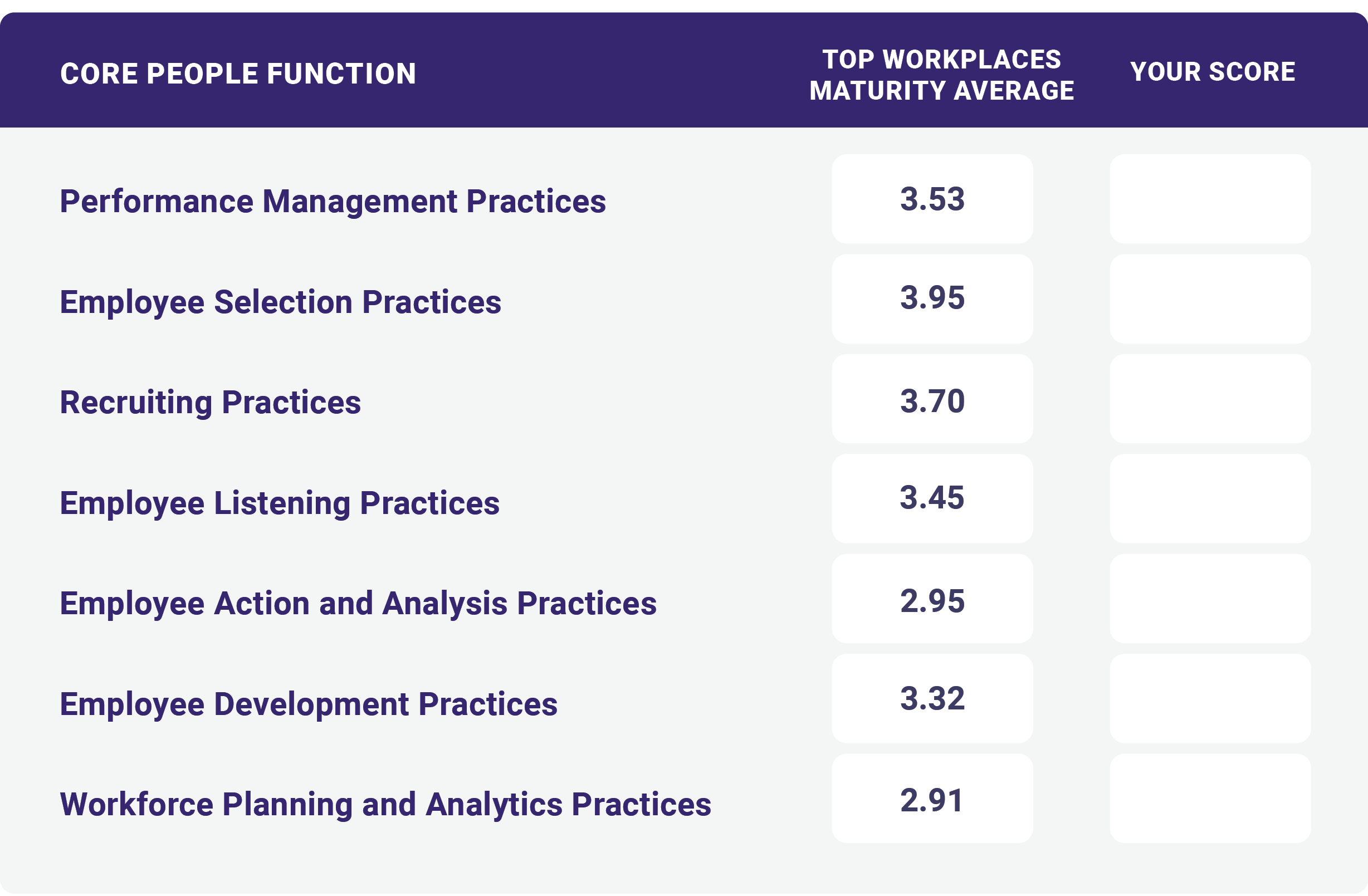
Along with your free report, get a no-cost Talent Maturity Index assessment.
In under 30 minutes, you’ll discover:
- How your talent management strategy stacks up to Top Workplaces.
- Where gaps exist across seven key areas of talent management.
- A clear, actionable roadmap that elevates your talent strategy.