Free coffee is nice. Team outings are fun. Neither creates real employee engagement.
What actually drives engagement is understanding what makes each person tick. Understanding why they show up energized one day and drained the next. Or why one employee thrives under pressure while another shuts down.
That’s where behavioral assessments come in.
When it comes to employee engagement, understanding behavior is one of the most powerful tools leaders have. When used well, they give you real insight into your people — how they behave, what motivates them, and how they prefer to work. And when you understand that, engagement stops being guesswork.
Behavioral assessment key takeaways
- Engagement improves when employees feel understood.
- Behavioral assessments reveal what motivates each person.
- Personalized management outperforms one-size-fits-all strategies.
- Better communication starts with understanding work styles.
- Data-driven insights turn engagement into a repeatable strategy.
Why behavioral assessments matter for employee engagement
1. They help you understand what actually motivates people
Not everyone is driven by the same things. Some employees light up when they’re stretched and challenged. Others are motivated by stability, recognition, or knowing their work makes a difference. What fuels one person may overwhelm another.
Behavioral assessments help you uncover those differences in employee motivation early. Instead of assuming what motivates someone, you can design experiences that actually resonate with them.
When people feel heard, understood, and valued, engagement naturally rises.
2. Behavioral assessments move you beyond one-size-fits-all engagement
Blanket engagement strategies rarely work. Why?
Because people aren’t wired the same way.
Someone who values autonomy may thrive with space and ownership. Someone who scores high on collaboration may feel disengaged without regular interaction and teamwork. One person may want fast feedback. Another may prefer time to process.
Behavioral data gives you practical insight you can actually use. It helps managers flex their approach, personalize development, and create environments where different styles can succeed. That’s when employees start to feel truly seen.
3. Improving communication and relationships
Most engagement issues, believe it or not, center on miscommunication. Misaligned expectations. Managers and employees are talking past each other. So on and so forth.
Behavioral assessments don’t just identify different behaviors; they help decode communication preferences. Does someone value direct and concise feedback? Or do they prefer context and discussion? Do they process externally or internally?
Improving communication through behavioral insights is often one of the fastest ways to rebuild trust and strengthen engagement. As managers, when you adjust how they communicate (even slightly), it builds trust. And trust is the foundation of engagement.
How to choose the right behavioral assessment
If you’ve ever taken a personality quiz that felt interesting but not especially useful, trust you’re not alone. A great behavioral assessment should do more than describe someone. It should help you make better talent decisions with clarity and confidence, and we’ll show you how. Here’s what to look for:
It predicts performance (not just personality)
A predictive behavioral assessment doesn’t stop at “here’s how this person tends to behave.” It should help you identify top performers, spot high potential, and understand what success looks like in specific roles.
Insight is nice, but predictive insight is powerful.
It is built on trusted science
Look for tools grounded in a validated, research-backed framework, not trends or pop psychology. When decisions around hiring, development, and promotion are on the line, science matters.
It is role focused
The best assessments don’t treat every job the same. They allow you to compare individuals against role-specific benchmarks, so you can see where someone is likely to thrive and where friction might show up.
It delivers instant actionable insight
Managers have enough on their plates without having to add a hard-to-understand report to the mix. Look for a behavioral assessment that offers customizable, on-demand reports that translate data into clear next steps for coaching and development.
It scales with you
Whether you’re assessing one candidate or launching assessments across multiple teams at once, the right tool should grow with your organization, not slow you down.
It integrates with your broader talent strategy
Behavioral insights become far more useful when they connect to engagement data, development planning, and broader talent decisions.
It works globally
If your workforce spans regions or languages, accessibility matters. A strong assessment should support your global teams just as effectively as your local ones.
When you choose the right behavioral assessment, don’t think of it as you’re adding another tool to your HR stack. Instead, think of it as equipping leaders with a smarter way to understand, support, and grow their people.
Behavioral assessments enable engagement that lasts
To summarize, behavioral assessments help you understand how your people experience work, what energizes them, what drains them, and where friction might quietly build over time.
When you use that insight well:
- Engagement becomes more personal.
- Development becomes more focused.
- Managers become more effective.
- Turnover becomes more preventable.
Most importantly, employees feel understood, and that’s what keeps them committed.
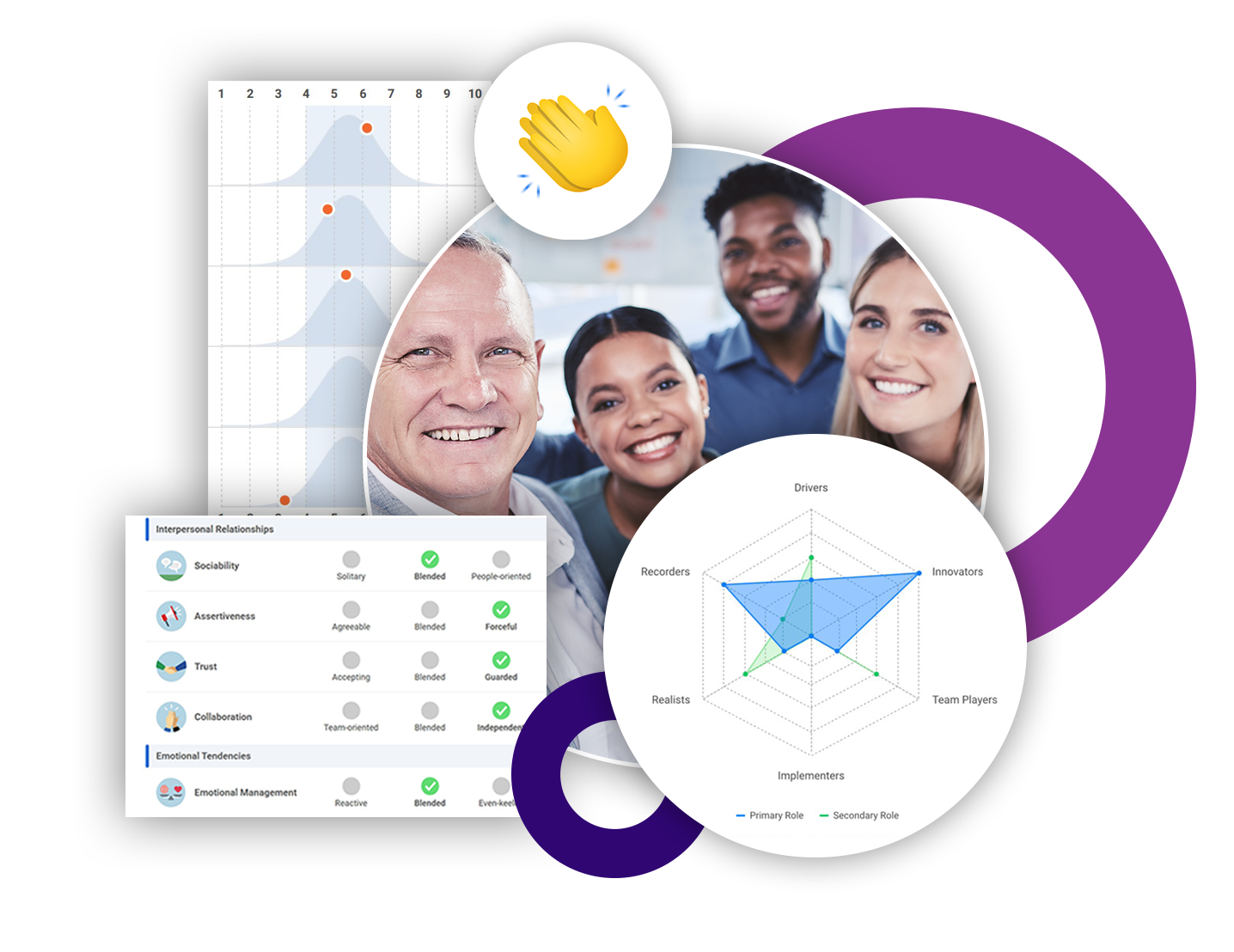
See the Behavioral Assessment in Action
Stop guessing what motivates your people and start leading with real insight.
Try the Energage Behavioral Assessment at no cost and zero commitment for 14 days. Take it yourself, loop in five colleagues, and see what the data says about how you work together.
Frequently Asked Questions About Behavioral Assessments
Behavioral assessments evaluate how employees think, communicate, and respond to work, helping organizations better understand individual motivations and work styles.
They enable personalized management, align work with individual motivators, and reduce communication friction—leading to stronger engagement.
Employees are motivated by different factors, so tailored strategies are more effective than generic engagement programs.
They help managers adapt communication, feedback, and leadership styles to better support each employee.
Engagement surveys measure how employees feel, while behavioral assessments explain why by uncovering underlying drivers of behavior.