Employee satisfaction and engagement matter to every organization. Engagement surveys give leaders actionable insight into how people feel about their roles, their teams, and the workplace. They shine a light on where efforts are working ― and where they aren’t.
But behind the survey numbers are individual human experiences that shape how people interpret their work day to day. As HR professionals who are accustomed to managing a group of people, you may have asked yourself questions like:
- Why do some employees thrive while others struggle?
- Why do employees in identical roles respond so differently to the same work environment?
- And how can leaders and coaches help individuals navigate those differences more effectively?
To answer these questions, our People Science Team analyzed data from more than 100,000 individuals who completed the Energage Behavioral Assessment and reported their job satisfaction.
What we found adds important context to engagement data ― and helps explain how individual behavior shapes the way people experience work.
Key takeaways about job satisfaction and behavioral fit
- Job satisfaction is shaped by behavioral fit, not just the job itself.
- Self-awareness is the foundation of satisfaction at work.
- Behavioral insights turn vague dissatisfaction into actionable insight.
- Coaching is more effective when grounded in behavioral data.
- Employees improve job satisfaction by adapting how they work — not just where they work.
Behavioral patterns linked to higher job satisfaction
Behavioral assessment insights showed that certain tendencies were consistently linked to higher job satisfaction.
People who reported higher job satisfaction tend to:
- Stay calm and resilient under stress.
- Follow through reliably on commitments.
- Feel comfortable engaging socially.
- Speak up and assert their needs.
- Work independently with initiative.
These patterns showed consistently across the data and reflected stable tendencies, not temporary moods or situational factors. They help explain why two people in the same role, facing the same expectations, can experience their work differently over time.
For HR leaders, managers, and coaches, this means:
- Engagement and retention efforts should focus less on what employees can do and more on how they experience work.
- Behavioral assessment data can help identify job satisfaction risk before it shows up in surveys or turnover metrics.
- Decisions around role fit, manager alignment, and development investments become more precise once we understand which behavioral styles thrive in which environments.
Job satisfaction truly hinges on understanding how individuals are wired and ensuring their roles and environment naturally align with those innate tendencies. Behavioral assessments are a fantastic tool to help you learn these dynamics early on, giving you ample time to adjust.
Discover More: The Power of Behavioral Assessments: Seeing Your Future Leaders Sooner
Behavioral patterns associated with lower job satisfaction
Behavioral assessment data also revealed patterns that were consistently linked to lower levels of job satisfaction.
Employees with tendencies toward anxiety, social withdrawal, or tension reported lower job satisfaction. Keep in mind, these aren’t labels. Rather, they reflect measurable behavioral styles that influence how people experience pressure, relationships, and complexity in their roles. These tendencies help explain why the same role can feel manageable to one person and overwhelming to another.
For HR leaders and coaches, this has important implications:
- Employees prone to anxiety or tension may experience a role as significantly more stressful than others do.
- When strain goes unaddressed, traditional engagement efforts often miss the mark.
- Early identification enables leaders to intervene with coaching or adjustments before turnover becomes an issue.
Download the Free Guide: The Field Guide to Job Satisfaction
From a coaching perspective, behavioral assessment insights shift the conversation. Instead of focusing on what’s “wrong” with a job or role, coaches can explore how an individual’s behavioral style shapes their experience of work — and where targeted support or adaptation might improve satisfaction.
Using behavioral assessments to understand these patterns is an essential asset for coaching because it shifts the conversation from “what’s wrong with this job” to how someone’s style influences their work experience.
A coaching perspective: ask better questions
With that lens in place, coaching becomes more specific and actionable. Instead of debating whether the work is “good” or “bad,” the focus turns to asking better questions:
- How do you naturally respond to uncertainty or stress?
- Where might your caution or tension be shaping your perception of a situation?
- What parts of your work feel energizing and why?
- Where might different approaches yield a more satisfying experience?
Anchoring these conversations in behavioral insight leads to clearer self-awareness and more actionable coaching. Rather than offering generic advice, coaches can help individuals identify strategies that align with their natural tendencies while still supporting growth, resilience, and satisfaction at work.
How behavioral assessments support development
Behavioral Assessments provide a research-based way to surface the same patterns we saw in the job satisfaction data. When individuals understand their own behavioral tendencies, coaching conversations become more focused and effective.
Specifically, these conversations become more:
- Insightful: grounded in self-awareness rather than guesswork.
- Practical: focused on strategies that align with natural disposition.
- Empowering: supporting self-management rather than labeling.
In coaching and development contexts, this awareness helps individuals:
- See how their style shapes their work experience.
- Develop strategies to navigate challenging demands.
- Adapt behaviors to support satisfaction and well-being.
- Align their strengths with role expectations and opportunities.
The goal isn’t to change who someone is. It’s to give them a clearer map so they can navigate their work with more intention and confidence.
When behavioral insights meet engagement data
Employee engagement survey insights tell us how employees feel. Behavioral assessment insights help explain why they might be feeling that way. Together, they create a stronger foundation for both coaching and organizational decision making:
- Workplace survey data shows where satisfaction or dissatisfaction is trending.
- Behavioral assessment insights highlight individual differences underlying those trends.
This combined view allows leaders and coaches to tailor their strategies in ways that resonate with each person’s unique style, driving more meaningful growth and engagement.
The key takeaway for HR leaders and coaches
This behavioral assessment research tells a simple yet powerful story:
Job satisfaction isn’t just about what’s happening in the workplace. It’s about how individuals engage with, interpret, and respond to their environment.
Leaders and coaches who combine behavioral assessment insights with engagement data gain a more complete picture of the employee experience.
The result? Better conversations, sharper development plans, and a more supportive path toward job satisfaction and employee fulfillment.
What's Driving Job Satisfaction Below the Surface?
Pair engagement data with the behavioral assessment insights to uncover how individual work styles shape the employee experience. When you understand how people are wired — not just how they feel — you can make smarter decisions about role fit, coaching, and retention.
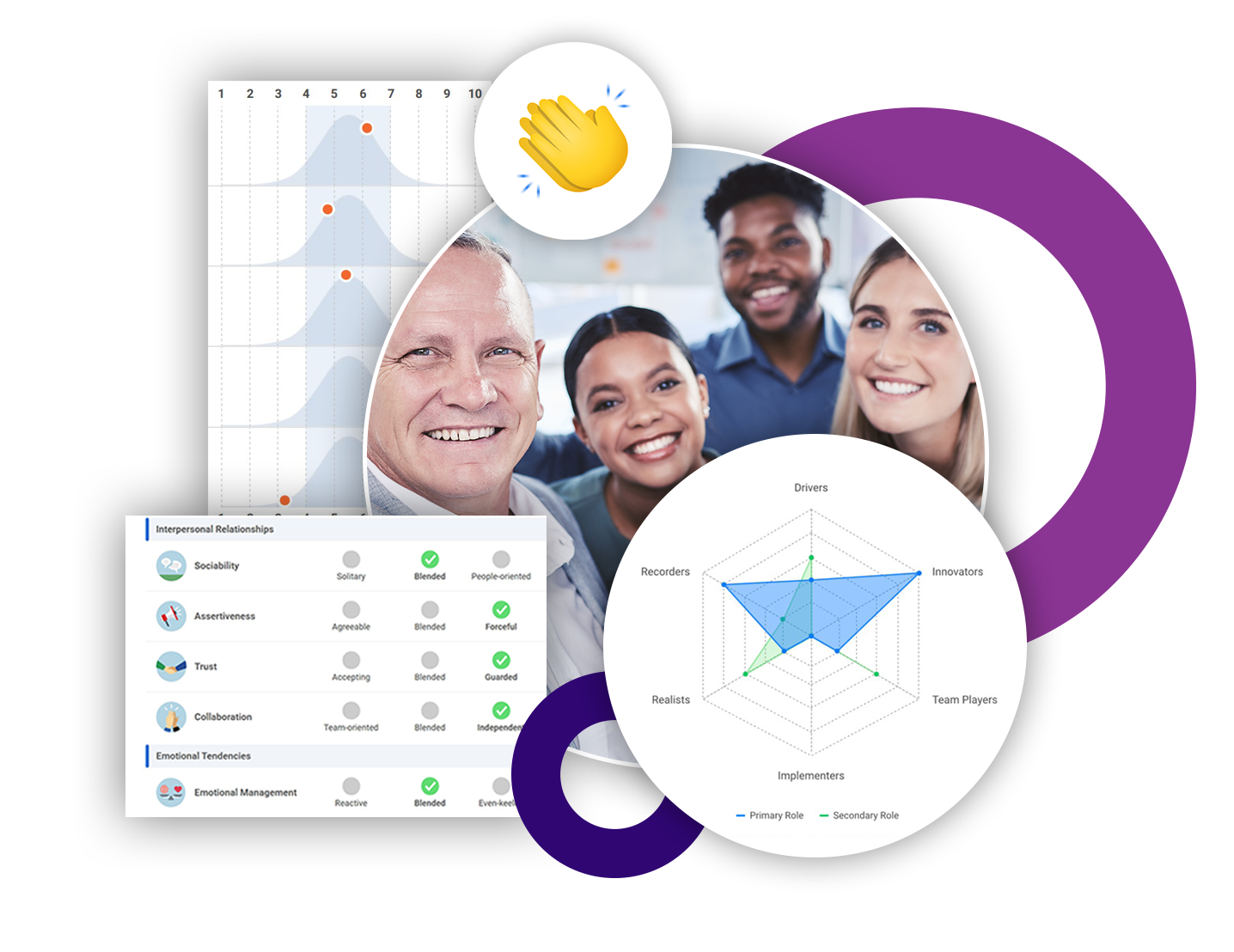
See the Behavioral Assessment in Action
Try the Energage Behavioral Assessment at no cost and zero commitment for 14 days. Take it yourself, loop in five colleagues, and see what the data says about how you work together.
Frequently Asked Questions About Job Satisfaction
Job satisfaction is how positively an employee feels about their work, including their role, environment, and overall experience.
They help employees understand their natural tendencies, making it easier to adjust behaviors, manage challenges, and find more fulfilling ways to work.
Because job satisfaction depends on behavioral fit — how well a person’s natural style aligns with the demands of the role.
They shift conversations from opinions to data, helping coaches provide practical, personalized strategies instead of generic advice.
Yes. By understanding and adapting their behaviors, employees can reshape how they experience their work and increase satisfaction.