How HR Leaders Can Help Managers Run Better 1:1s and Coach Employees More Effectively
Employee check-ins key takeaways:
- Frequent employee check-ins can boost performance by up to 26%.
- 78% of employers say their managers aren’t equipped to lead effective check-ins.
- Consistency matters. Weekly or biweekly 1:1 meetings outperform annual reviews.
- The best check-ins are two-way conversations, not manager-led updates.
- Employee development should be part of every check-in, not just formal reviews.
- Top Workplaces use a simple structure to run more effective, consistent conversations.
Why employee check-ins matter more than ever
In today’s workplace, performance management isn’t a once-a-year event — it’s an ongoing conversation. And the data backs it up: organizations using continuous performance practices (like regular check-ins) see measurable improvements — up to 26% — in employee performance.
But here’s the real unlock: check-ins aren’t just about performance. They’re about connection, clarity, and growth. HR’s role? Make it easy for managers to do this well and consistently.
Organizations already recognize that employee development matters — but execution tells a different story.
Energage People Science research shows that 78% of HR leaders say their managers aren’t highly effective at supporting employee development, and more than one-third of employees aren’t getting consistent career support from their manager.
That gap shows up in everyday interactions. Without structure and support, check-ins often default to status updates instead of meaningful development conversations.
What are employee check-ins and why do they matter?
At its core, an employee check-in is a regular, structured conversation between a manager and an employee designed to align priorities, support development, and improve performance.
An effective check-in covers:
- Progress on goals and priorities.
- Individual development and growth.
- Challenges, roadblocks, or concerns.
- Strengths, interests, and career ambitions.
- Next steps and evolving goals.
But in many organizations, this part of the conversation is inconsistent or missing entirely. In fact, 38% of employees say they don’t have ongoing career discussions with their manager.
Help managers think of employee check-ins as a GPS reroute for performance and growth, rather than a status update.
Seven types of check-ins every manager should use
Not all check-ins are created equal, and that’s a good thing. Different moments call for different conversations. These different types of employee check-ins help managers run more effective 1:1 meetings and support continuous performance management.
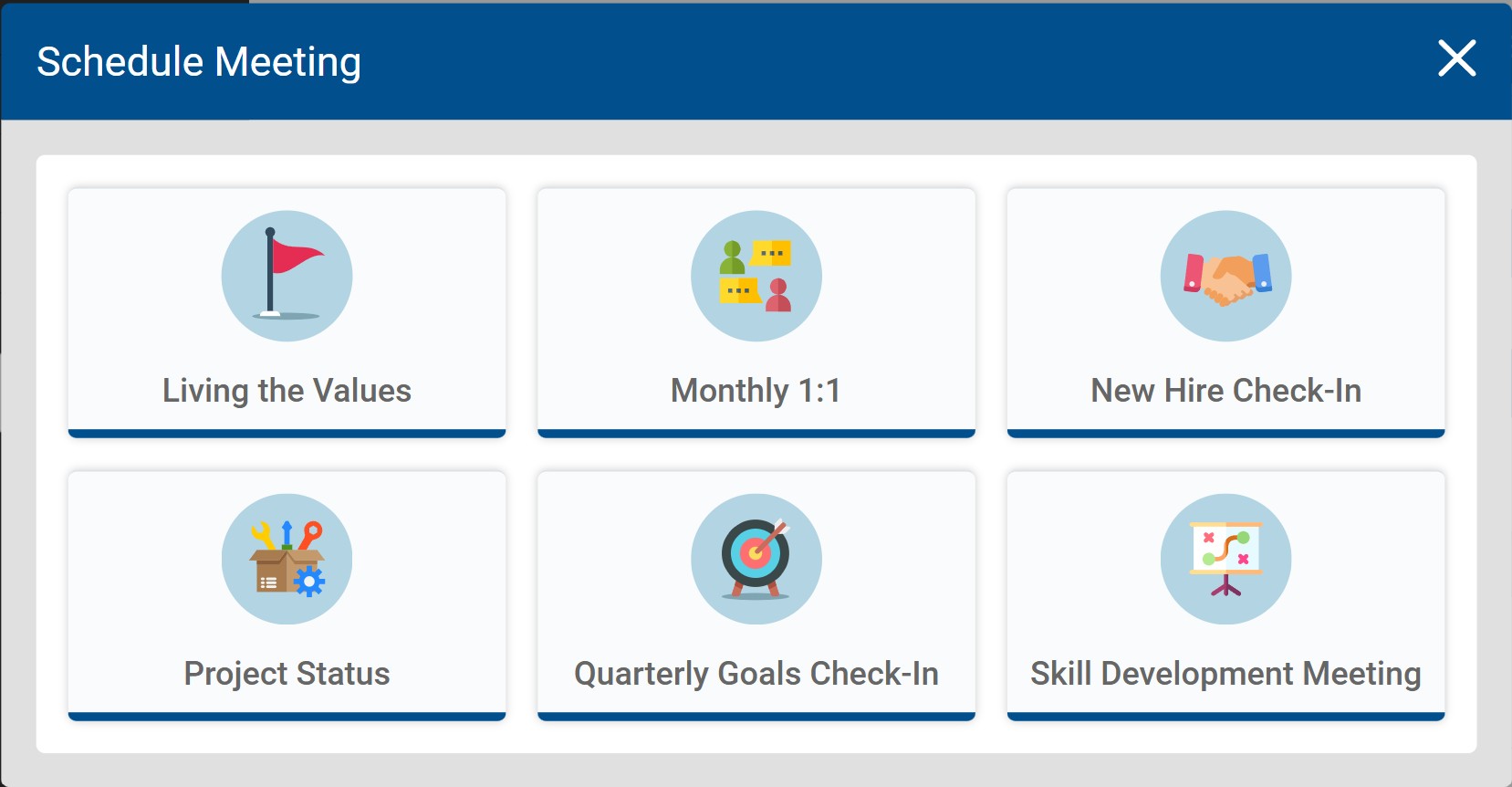
1. Weekly or biweekly 1:1s help alignment and remove roadblocks
Weekly or biweekly 1:1s are the heartbeat of effective employee check-ins. These conversations keep managers and employees aligned, surface challenges early, and help work move forward without unnecessary friction.
The problem? Our research shows that only 6% of managers report having weekly development discussions. That gap is one of the biggest reasons growth stalls.
2. Goal check-ins track progress and adjust priorities
Goal check-ins create a dedicated moment to pause, reflect, and make sure priorities still make sense. Instead of waiting for an annual review, these conversations help teams stay flexible and focused in real time. Done right, these check-ins keep everyone moving toward what matters most.
Insight: Quarterly goal check-ins are a sweet spot for recalibrating goals without losing momentum.
3. Development and career conversations guide long-term aspirations
Development conversations are where work starts to feel more meaningful, but they don’t happen often enough. Research also suggests that managers tend to focus more on feedback than on growth, leaving employees without a clear path forward. These conversations should play a consistent part in every check-in.
Pro Tip: Ask, “Where do you want to grow next?” … and actually listen. A simple question like the one above can open the door to deeper, more motivating conversations.
4. New hire check-ins ensure smooth onboarding and early engagement
The first few weeks in a new role can shape an employee’s entire experience. Regular check-ins during this time help new hires feel supported, clear on expectations, and comfortable asking questions.
Why it matters: Early connection = stronger retention.
5. Pulse check-ins gauge engagement and satisfaction
Pulse check-ins go beyond work. They create space to understand how employees are really doing. Listening closely — especially to tone and body language — can reveal key insights into engagement, well-being, and team dynamics. Empathy here has an outsized impact.
Keep it human: “How are you really doing?” goes a long way.
6. Project or task check-ins keep work moving and priorities clear
Project check-ins help keep everyone on the same page without getting bogged down in the details. They’re an opportunity to clarify priorities, talk through progress, and make sure nothing is slipping through the cracks.
Key tip: Focus on outcomes, not just activity.
7. Upward feedback conversations help managers improve and grow
Upward feedback may feel uncomfortable, but it’s essential. When managers create space for honest input, employees are more likely to share valuable insights. Over time, that openness builds trust and strengthens the team.
The reality: Employees want to share feedback if you create the space.
How you can set up your managers for success
Even with the right intentions, many organizations struggle to turn employee check-ins into meaningful development conversations. The issue isn’t whether managers care. It’s whether they’re set up to succeed.
The manager enablement gap
Managers are expected to play a central role in employee development, but most aren’t equipped to do it while balancing growing workloads and competing priorities. Energage research shows that only 22% of organizations rate their managers as highly effective at supporting employee development, with the majority falling into the “moderately effective” range.
This isn’t a capability issue — it’s an enablement gap.
Without the right structure, tools, and expectations, even well-intentioned managers default to transactional conversations. That’s why HR’s role isn’t just to encourage check-ins — it’s to make them easier to do well.
Give managers a simple framework for employee check-ins
Managers don’t need a script, but they do need structure. Without a clear framework, check-ins often become inconsistent or overly focused on immediate tasks instead of long-term development.
Here is a quick checklist for running effective employee check-ins:
- Connect: Start with the human side
- Review: Progress on goals and priorities
- Explore: Challenges and opportunities
- Develop: Skills, growth, and aspirations
- Align: Next steps and commitments
Normalize the frequency of employee check-ins
Research shows 81% of employees prefer more frequent check-ins. Still, most employers continue to rely on annual or semi-annual reviews. This makes continuous development difficult to sustain. That’s why it’s important for managers to:
- Meet weekly or biweekly for tactical alignment.
- Hold quarterly goal conversations.
- Incorporate development discussions regularly.
Make check-ins a two-way conversation
Great check-ins are all about creating space for meaningful dialogue. They should never feel like an interrogation.
The difference is outstanding when employees feel heard versus when they don’t. You’ll find your employees being more engaged, more honest, and more invested in their outcome as it pertains to the organization.
Aim for a 50/50 talk ratio. If the manager is doing all the talking … it’s not a check-in.
Encourage real-time feedback for more impact
The most effective feedback doesn’t wait for a formal review; it happens in the moment. Timely feedback beats delayed feedback every time. Here are three important things to consider:
- Don’t wait for reviews.
- Capture insights as they happen.
- Reinforce both wins and growth areas.
The closer feedback is to the moment, the more relevant, actionable, and impactful it becomes.
Tie employee development to daily work
Development shouldn’t feel separate from the work employees do every day. It should be embedded within it. Many organizations already have tools to support development — such as Individual Development Plans (IDPs) — but they’re underutilized. In fact, 70% of organizations rarely use IDPs or don’t use them at all.
Check-ins are where these tools become valuable. When managers consistently use them in conversations, development becomes part of the workflow rather than a separate initiative.
What Top Workplaces do differently with employee check-ins
Top Workplaces take a more intentional approach to employee check-ins — and it shows in how they develop their people.
Instead of treating check-ins as informal or inconsistent conversations, they build structure and accountability into the process. Managers are expected to do more than provide feedback; they’re also expected to actively support growth. Here’s are five things they do differently to ensure success:
- Stay consistent: Keep a steady cadence to build trust and momentum.
- Document key takeaways: Keep a record so commitments and follow-through stay clear.
- Broaden the perspective. Bring in peer or team input for a more complete view.
- Focus on strengths. Build on what’s working, not just what needs fixing.
- Make it human. Create space for real connection — that’s what builds real trust.
Top Workplaces shape culture by creating:
- Stronger manager-employee relationships.
- Clearer expectations.
- More engaged employees.
- Continuous growth (not just annual reflection).
The difference isn’t more effort. It’s better execution. Employee check-ins are one of the most practical ways to close that gap. When done well, they turn development from a once-a-year conversation into an everyday practice.
Take employee check-ins to the next level
See how it works → Request a demo today.
Frequently asked questions about employee check-ins
Weekly or biweekly for regular 1:1s, with quarterly deeper goal and development conversations.
Goals, progress, challenges, development, and future priorities—plus space for employee input.
Typically 30–60 minutes, depending on the depth and frequency.
Check-ins are ongoing, informal, and forward-looking. Reviews are periodic and evaluative.
Provide tools, simple frameworks, and reinforce expectations through leadership and culture.